
One of the first things authoritarian systems attempt to control is narrative.
Not weapons.
Not borders.
Stories.
Because stories shape public memory. They define who is visible, who is believed, and who is allowed to exist in history.
This is why women’s voices become threatening under systems built on control and exclusion. A woman speaking openly about her life, education, imprisonment, ambitions, or resistance directly challenges structures designed to silence her.
The fear is not simply about speech itself. It is about visibility.
When women document injustice publicly, they expose contradictions authoritarian systems try to hide. Personal testimony transforms abstract politics into human reality. Statistics become names. Policies become lived experiences. Silence becomes impossible to maintain.
Afghan women understand this deeply.
For decades, women journalists, teachers, artists, activists, and students have continued speaking despite intimidation, violence, and censorship. Even after severe restrictions returned under Taliban rule, women still protested publicly, documented abuses online, and organized educational networks in secret.
This persistence matters historically.
Many oppressive systems attempt to erase women gradually rather than instantly. Public presence shrinks first. Employment disappears. Education is restricted. Visibility fades. Eventually, silence begins to look normal to outsiders.
That normalization is dangerous.
It teaches future generations to accept exclusion as cultural inevitability instead of recognizing it as political oppression.
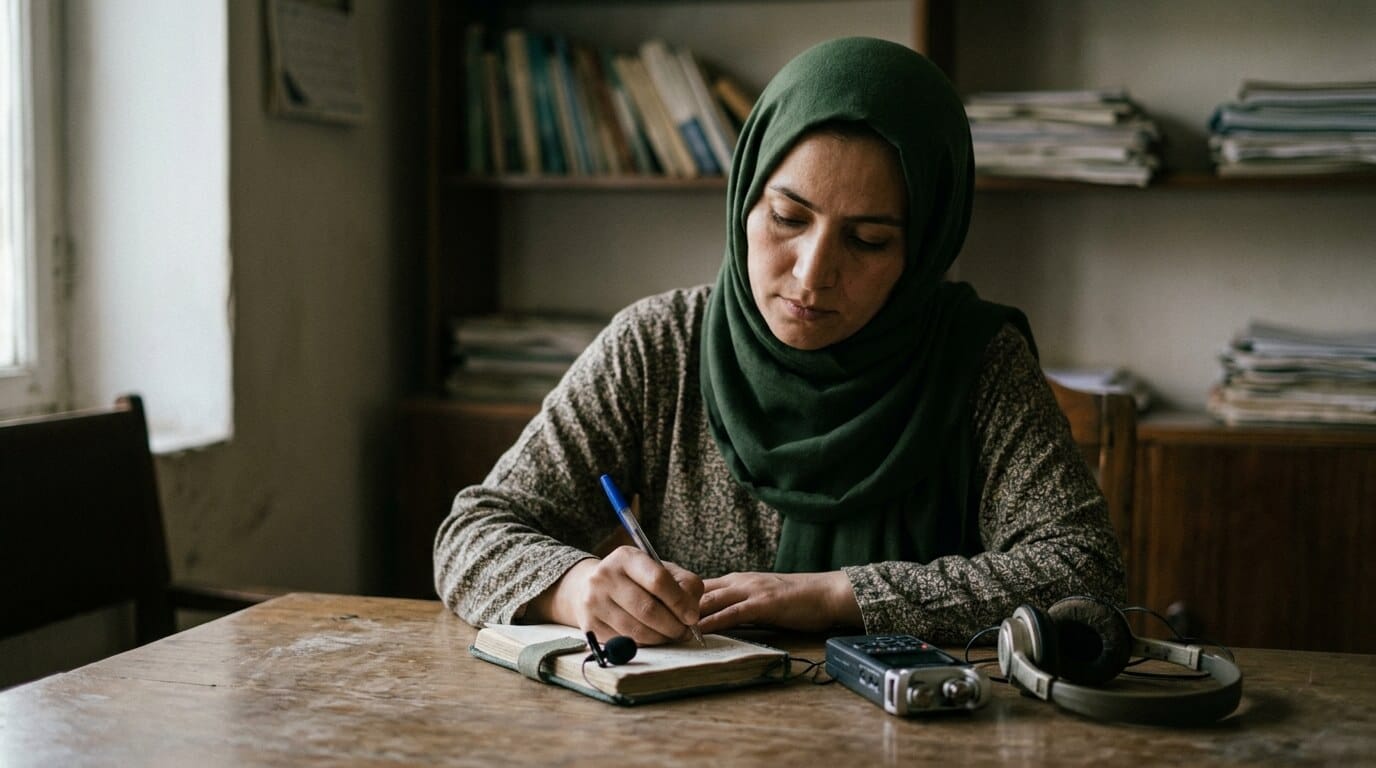
This is one reason documentary storytelling is so important. Audio testimonies preserve emotional truth in ways statistics often cannot. A trembling voice describing fear, hope, humiliation, or courage carries something deeply human that official narratives struggle to erase.
At Women For Women, we see storytelling as documentation—not entertainment.
These stories are part of a living archive created by Afghan women who refuse disappearance. They are evidence of existence, resistance, and survival during one of the most restrictive periods in modern Afghan history.
The goal is not only awareness.
Awareness without memory fades quickly.
- The goal is preservation.
- To preserve voices.
- To preserve testimony.
- To preserve truth before silence rewrites it.