
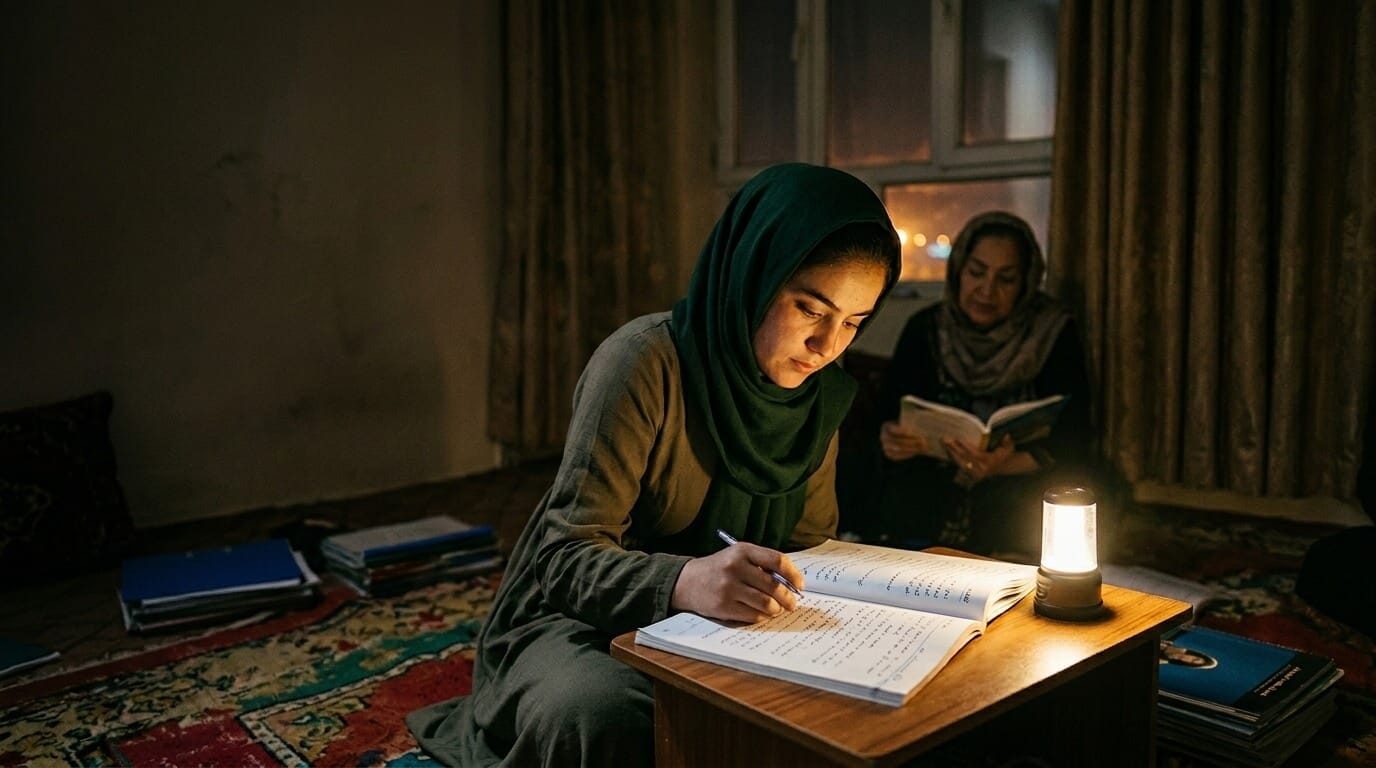
For millions of people around the world, education is routine. A classroom is simply a place to learn, socialize, plan for the future, or pass another semester. But for many Afghan women today, entering a classroom has become something else entirely: an act of resistance.
Since the Taliban returned to power, girls and women across Afghanistan have faced systematic restrictions on education. Universities closed their doors to female students. Schools were suspended. Dreams built over years disappeared almost overnight. Yet beneath the silence imposed by fear and censorship, something remarkable continues to survive.
Women continue to learn.
Across Afghanistan, informal networks of education have quietly emerged inside homes, basements, and private gatherings. Young women study literature, medicine, law, languages, and science in secret. Teachers who once lectured in universities now tutor small groups behind closed curtains. Books are hidden. Phones are monitored. Neighbors are carefully observed.
Still, they continue.
The tragedy of educational bans is not only political—it is deeply personal. It interrupts identity itself. For many women, education was never simply about employment. It represented independence, dignity, intellectual freedom, and participation in society. Taking that away creates a form of social erasure designed to shrink women’s presence from public life.
But history repeatedly shows that repression often creates stronger forms of determination.
At Women For Women, we believe documenting these realities matters. Not because Afghan women need pity, but because their experiences reveal something essential about human resilience. The women risking their safety to continue studying are preserving more than knowledge. They are preserving memory, agency, and the idea that their existence cannot be reduced to silence.
The world often moves quickly from one crisis to another. Headlines disappear. Attention fades. But the consequences remain very real for those living through them every day.
This is why storytelling matters.
- Not as performance.
- Not as political branding.
- But as evidence.
Every testimony recorded becomes part of a larger historical archive that authoritarian systems cannot fully erase. Every voice shared publicly weakens the isolation imposed by fear.
- Afghan women are still speaking.
- Still learning.
- Still resisting.
And the world should continue listening.